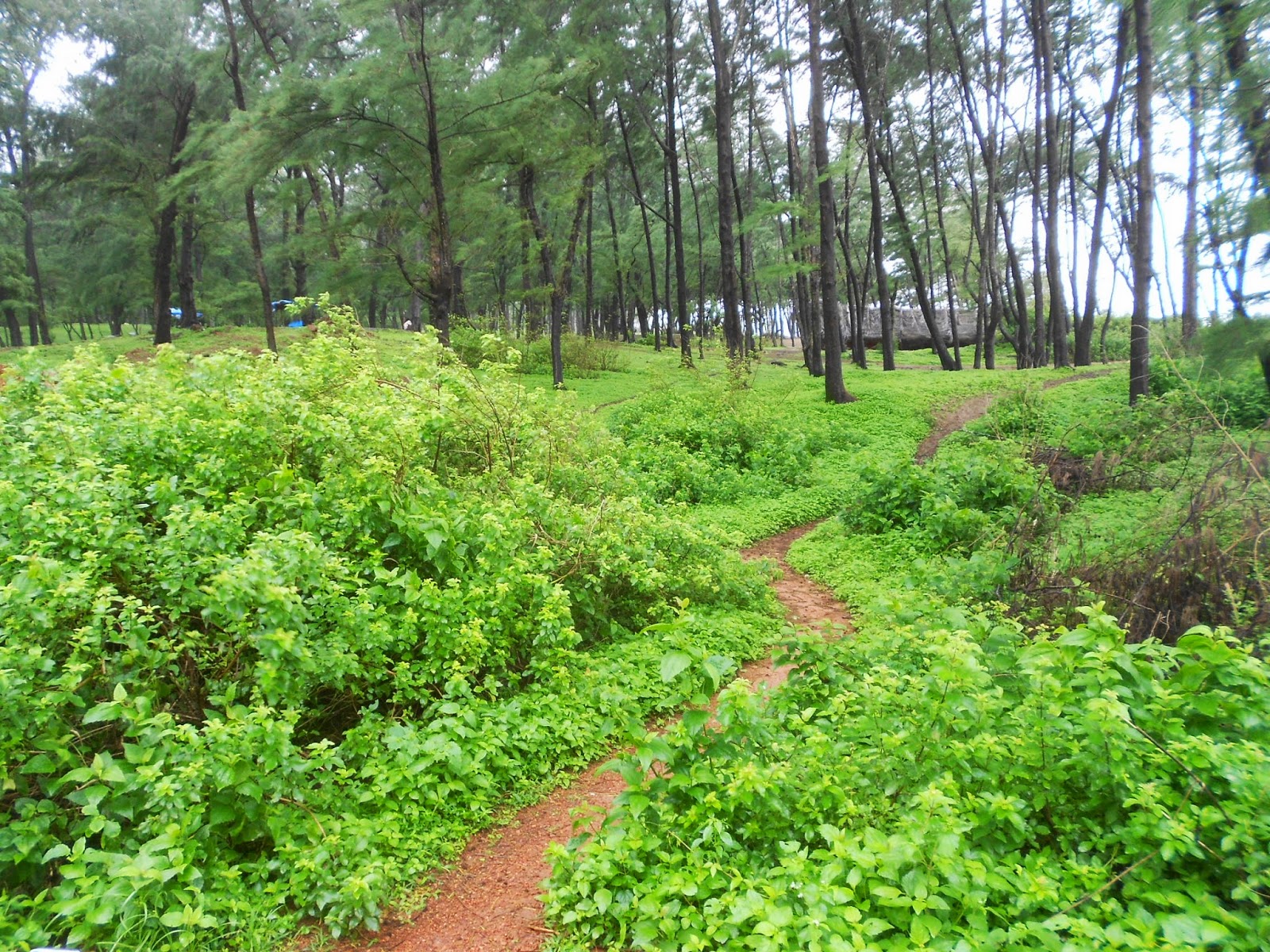
The bus stop is a dilapidated building. The windows at the back are open, shutters non-existent. A sudden sharp shower sent everyone near the windows scurrying for cover, yours truly included, massing towards the middle of the room. Many girls got soaked, in spite of their brave attempts to keep the rain away by opening up umbrellas. It appears like the camera did not get spared, either.

The fun thing about travelling in slightly rural places in India is that even a little trip across a state border feels like a different country. I could not decipher the board in which the bus routes and timings were listed, and could barely communicate with the khaki-clad officials in the bus stop. I finally learnt that the bus to Panaji would leave at 10:30 AM.

Red coloured Maharashtra State buses came by. As many umbrellas as people tried to get on and off the bus, all at the same time. I would have to hop aboard, try to, I mean, one of these buses to Sawantwadi town, in case my blue coloured Goa transport corporation bus did not make it.

My blue coloured Goa bus finally arrived, quite punctual, only a few minutes late, which was quite commendable, given the state of the roads and the rains. About 20 people tried to get off, and about 50 people tried to get on, with about 70 umbrellas and 70 bags, big and small, with traffic flowing simultaneously through the narrow door in both directions. It was all sorted out soon enough, and we were on our way, weaving down mountain roads. I got a ring side view from the second row seat. The passenger in front of me had the privilege of having the mesh to hold on to for support.

We crossed the newly built bridge to Goa. Soon enough, I realized in a flash that I had missed something during the past week. My levels of ignorance had reached abysmal depths. I had not been informed about the latest choices in real estate, clothing and jewelry. Ah, yes, we were back in Goa..!!

The River Mandovi reminded me about how heavy the monsoons had been over two months.

Panaji Bus Stop was one grand puddle after another. A VTOL propulsion device would have been rather more appropriate for these conditions.

I quickly made my way to the part of the bus stop from where the buses to Madgaon leave. Shiroda to Panaji Rs 45. Panaji to Madgaon Rs 30 (non-stop!).

Nanutel in Madgaon, about 10 minutes from the bus stop, was what the doctor ordered. I mean, what the Memsahib ordered, after my wanderings around villages and deserted beaches. The worry levels had reached sky high. So, this was my attempt to signal that all is well. You need to maintain a balance, after all.

Madgaon Park is a pleasant place, quite well maintained.

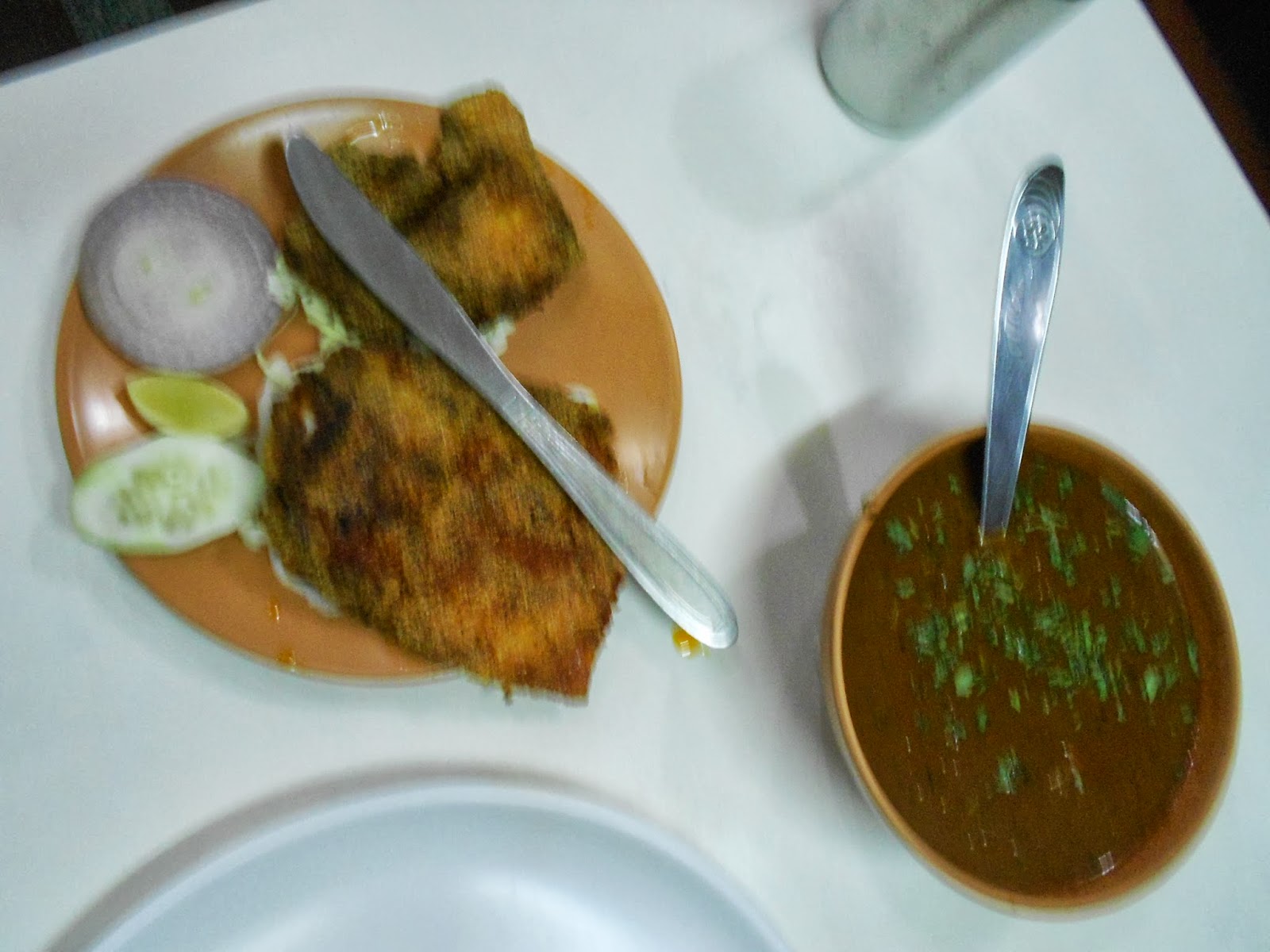
By then it was time for the customary Fish grill and Goan Masala Fish Curry rice lunch.

I wondered whether Dr Vas and Dr Das are brothers, perhaps.

All play and no work makes Jack a dull boy, is what I was taught in school. So, time for some work, which was a guest lecture at the Management Institute in Madgaon.

The building is a lovely Heritage Building, preserved extremely well.

Next stop Panaji, another express non-stop bus ride from Madgaon. Panaji is a very pleasant city to stroll around. Tree lined streets are found almost everywhere.

Immaculately maintained statues look down at you from way up there.

Quaint, narrow streets that you could tell used to be brightly coloured once upon a time invite you to come by and take a peek. Of course, goes without saying, you can stay as long as you wish. Nobody is likely to ask to leave, or even to ask you what you are doing there.


I wondered whether these buildings would pass any self-respecting building standards compliance tests.

The Ribander area by the River Mandovi, mid way between Panaji and Old Goa, was on my agenda. Wonderful views, with the Dr Salim Ali Bird Sanctuary across the broad river.

The Santa Casa de Misericordia was known as the Holy House of Charity. Yet another name was the Royal Portuguese Hospital, reputed to be Asia's first hospital. The building is a grand old heritage structure, several centuries old, now the city campus of the Goa Institute of Management.

This was the venue of my second 'work' engagement.

The interiors are beautiful, with high ceilings, naturally cool.

Panjim is a lovely city to walk around, narrow shady lanes and old structures that you suddenly happen upon, silently and maybe helplessly stating that it was all so pleasant and 'susegad' back then.

Further west from the Court area lies the impressive "Our Lady of the Immaculate Conception Church", completed in 1540.

The plant covered stairways lend it a quiet, mysterious air.

I wonder what HE must be thinking about, looking down at the cacophony below.

My hotel in Panaji was the Goa Tourism Department Residency, a walk in choice, very well located right in the midst of all the quiet, old streets and right opposite the river. .

Along the river, several people sat patiently for hours, fishing rods in hand. In the background are the jettys leading to the Casinos where another set of people would fish for something else all night.

I continued my wanderings. Lime anyone? Fresh lime, maybe?

This is the Government Irrigation Department Office. With monsoons like this, who needs an Irrigation department? You can tell, looking at the building. The officials must have gone home two months ago.

It is reported that the Portugese left in a great hurry in 1961. It appears as if they locked the City Bar and took the key with them.

The owner of this establishment was in such a hurry that while he must have locked the door, but probably forgot to take the key with him. Mr Carvalho appears to have taken over, and continues to conduct typewriting classes and repair old typewriters. We have an ancient one lying at home. I should remember to bring it over next time.

The old City Bar being closed, I found another watering hole nearby.

Quite upmarket, the furniture is fashioned out of old casks.

A convenient vantage point to watch the city go by.

Another piece of history near the Court.

Sao Tome Chapel.

The tree covered and leaf strewn Panaji General Post Office next to the Chapel, where tobacco used to be traded centuries earlier.

The view from my hotel is remarkable, with the street nearby and the Mandovi Bridge in the distance. Room with a view.

The Day-Fishermen have gone home and the Night-Fishermen have appeared. They are ferried over in colourful, party boats to the Casinos docked mid river. It's now their turn to try their luck.

Massive signage entices gullible folks. One sign even claims 'where winning is a habit'. Indeed!

My quest was, however, for a different kind of Fish. Fish Land was conveniently located almost next door to Hotel Panaji Residency.

I tried out the Seer Fish Tawa Fry. It was extremely yummy.

Fish Land had won themselves a repeat customer! I went back several times. Fish Curry Rice was served with complimentary Tawa Fry. Where eating is a habit.
Not to be missed, in stark contrast to Fish Land, is the 'Pure Veg' Vihar restaurant, ideal for a quick breakfast before you start the day. They open at 7 AM.

Time to head off to Calangute now, the venue of our school's Old Boys' reunion at the Chalston Hotel. We passed the tall Mãe de Deus (Our Lady Mother of God) Church in Saligao.

Soon enough, it started raining. I took shelter under a huge tree by St Alex Church. Funnily enough, I had stood under the same tree to shield myself from the rain during my visit during the monsoons in August 2011.

The rain eased up, and the familiar sight of green fields once again sped by.

It was now time to change gears for Baga, and our school Old Boys' reunion in Calangute.
-=-=-=-=-=